
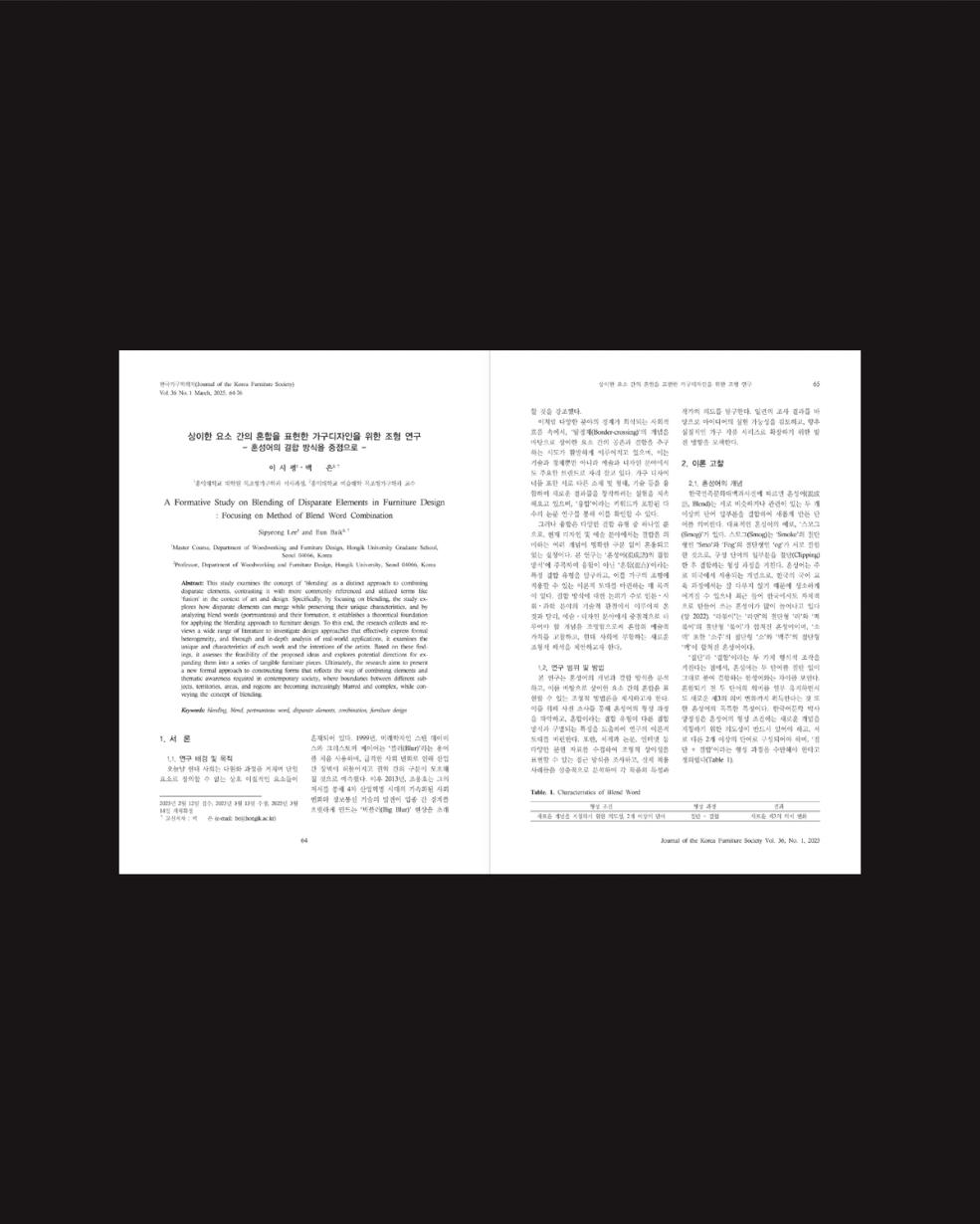

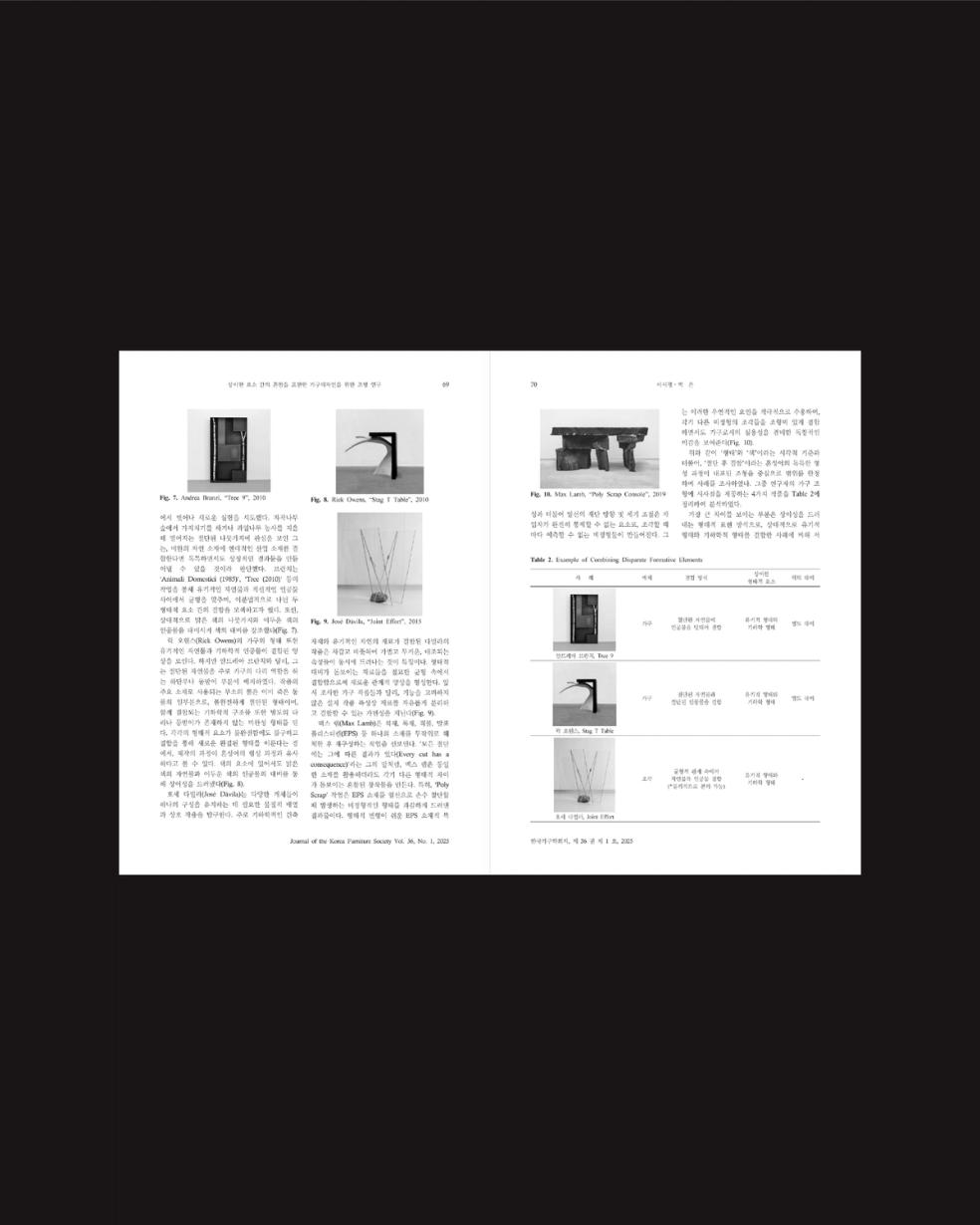

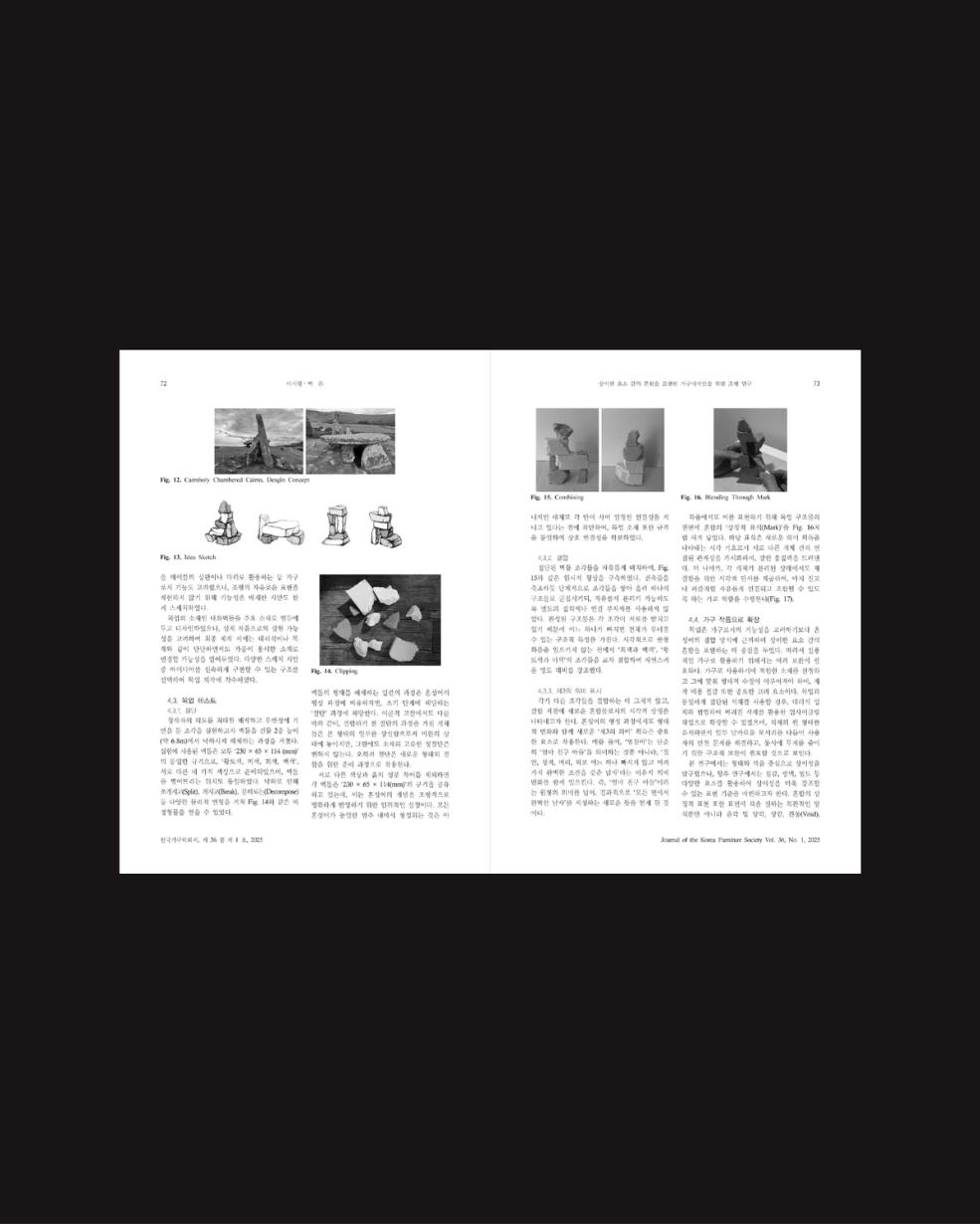

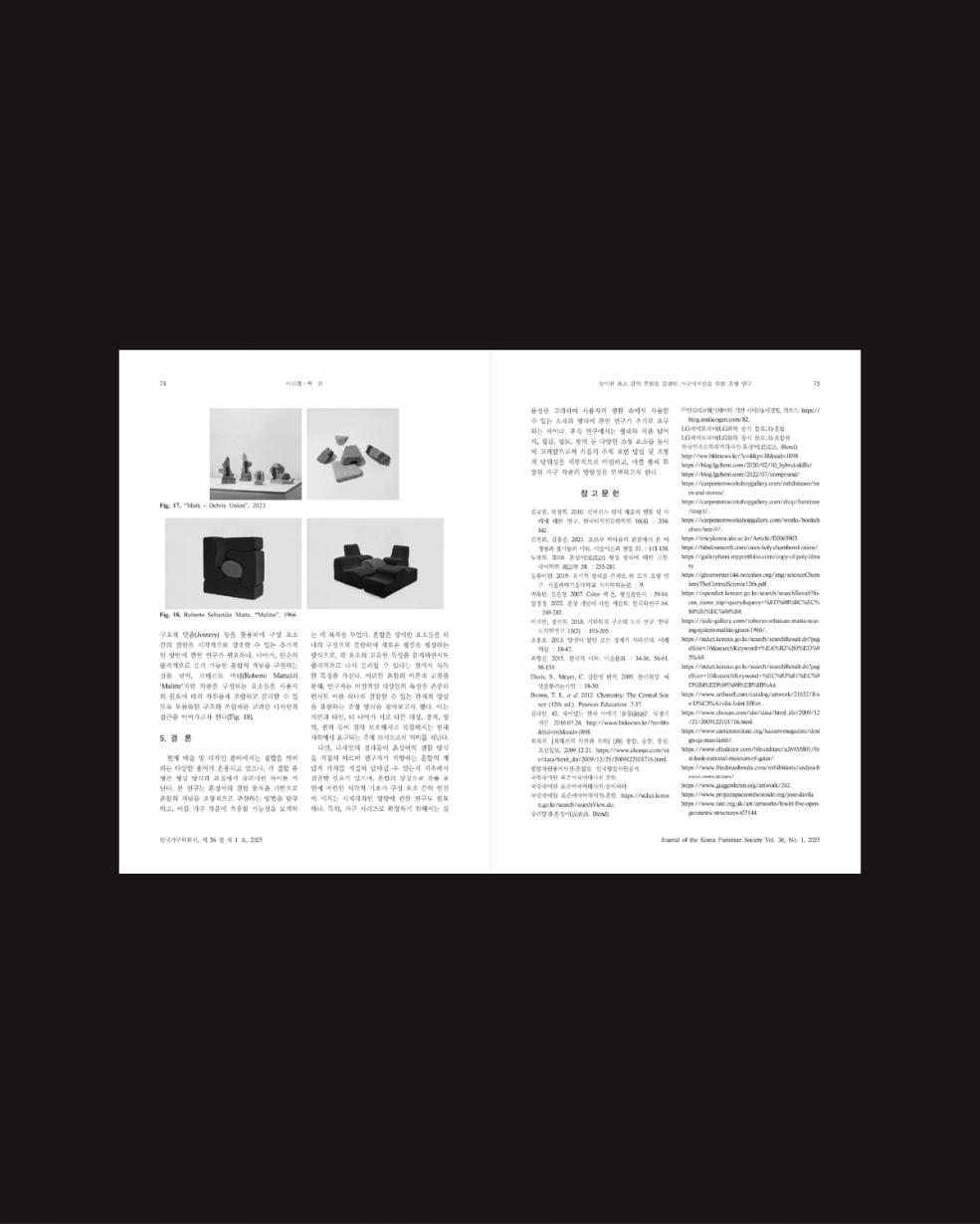
상이한 요소 간의 혼합을 표현한 가구디자인을 위한 조형 연구
A Formative Study on Blending of Disparate Elements in Furniture Design
한국가구학회지 Vol. 36 No. 1
Journal of the Korea Furniture Society Vol. 36 No. 1
다양한 분야의 경계가 희석되는 사회 흐름 속에서, 분야를 막론하고 ‘탈경계(Border-crossing)’의 개념을 바탕으로 상이한 요소 간의 공존과 결합을 추구하는 시도가 활발하게 이루어지고 있다. 탈경계는 기술과 경제뿐만 아니라 예술과 디자인 분야에서도 주요한 트렌드로 자리 잡으며, 가구 디자이너들로 하여금 서로 다른 소재 및 형태, 기술 등을 융합하여 새로운 결과물을 창작하려는 시도를 촉진하였다. 이는 ‘융합’이라는 키워드가 포함된 다수의 논문 연구를 통해 확인할 수 있다.
그러나 융합은 다양한 결합 유형 중 하나일 뿐으로, 현재 디자인 및 예술 분야에서는 결합을 의미하는 여러 개념이 명확한 구분 없이 혼용되고 있는 실정이다. 본 연구는 ‘혼성어(混成語)의 결합 방식’에 주목하여 융합이 아닌 ‘혼합(混合)’이라는 특정 결합 유형을 탐구하고, 이를 가구의 조형에 적용할 수 있는 이론적 토대를 마련하고자 한다. 결합 방식에 대한 논의가 주로 인문⋅사회⋅과학 분야의 기술적 관점에서 이루어져 온 것과 달리, 예술⋅디자인 분야에서 중점적으로 다루어야 할 개념을 조명함으로써 혼합의 예술적 가치를 고찰하고, 현대 사회에 부합하는 새로운 조형적 해석을 제안하고자 한다.
As the boundaries between disciplines continue to blur in contemporary society, attempts to pursue the coexistence and combination of heterogeneous elements based on the concept of border-crossing have become increasingly widespread. This tendency has emerged as a major trend not only in technology and economics but also in the fields of art and design. Furniture designers have likewise continued to experiment with combining different materials, forms, and techniques to create new works, as evidenced by the growing number of academic studies that include the keyword “convergence.”
However, convergence is only one of many modes of combination, and in contemporary art and design, concepts referring to combination are often used interchangeably without clear distinction. This study focuses on the combinatory mechanism of blended words and explores “mixture,” rather than “convergence,” as a distinct mode of combination. Its purpose is to establish a theoretical foundation for applying this concept to furniture form. Unlike previous discussions of combinatory methods, which have primarily been approached from technical perspectives in the humanities, social sciences, and natural sciences, this study highlights concepts that deserve greater attention in the fields of art and design. In doing so, it examines the artistic value of mixture and proposes a new formal interpretation that responds to contemporary society.
상이한 요소 간의 혼합을 표현한 가구디자인을 위한 조형 연구
한국가구학회지 Vol. 36 No. 1
다양한 분야의 경계가 희석되는 사회 흐름 속에서, 분야를 막론하고 ‘탈경계(Border-crossing)’의 개념을 바탕으로 상이한 요소 간의 공존과 결합을 추구하는 시도가 활발하게 이루어지고 있다. 탈경계는 기술과 경제뿐만 아니라 예술과 디자인 분야에서도 주요한 트렌드로 자리 잡으며, 가구 디자이너들로 하여금 서로 다른 소재 및 형태, 기술 등을 융합하여 새로운 결과물을 창작하려는 시도를 촉진하였다. 이는 ‘융합’이라는 키워드가 포함된 다수의 논문 연구를 통해 확인할 수 있다.
그러나 융합은 다양한 결합 유형 중 하나일 뿐으로, 현재 디자인 및 예술 분야에서는 결합을 의미하는 여러 개념이 명확한 구분 없이 혼용되고 있는 실정이다. 본 연구는 ‘혼성어(混成語)의 결합 방식’에 주목하여 융합이 아닌 ‘혼합(混合)’이라는 특정 결합 유형을 탐구하고, 이를 가구의 조형에 적용할 수 있는 이론적 토대를 마련하고자 한다. 결합 방식에 대한 논의가 주로 인문⋅사회⋅과학 분야의 기술적 관점에서 이루어져 온 것과 달리, 예술⋅디자인 분야에서 중점적으로 다루어야 할 개념을 조명함으로써 혼합의 예술적 가치를 고찰하고, 현대 사회에 부합하는 새로운 조형적 해석을 제안하고자 한다.
A Formative Study on Blending of Disparate Elements in Furniture Design
Journal of the Korea Furniture Society Vol. 36 No. 1
As the boundaries between disciplines continue to blur in contemporary society, attempts to pursue the coexistence and combination of heterogeneous elements based on the concept of border-crossing have become increasingly widespread. This tendency has emerged as a major trend not only in technology and economics but also in the fields of art and design. Furniture designers have likewise continued to experiment with combining different materials, forms, and techniques to create new works, as evidenced by the growing number of academic studies that include the keyword “convergence.”
However, convergence is only one of many modes of combination, and in contemporary art and design, concepts referring to combination are often used interchangeably without clear distinction. This study focuses on the combinatory mechanism of blended words and explores “mixture,” rather than “convergence,” as a distinct mode of combination. Its purpose is to establish a theoretical foundation for applying this concept to furniture form. Unlike previous discussions of combinatory methods, which have primarily been approached from technical perspectives in the humanities, social sciences, and natural sciences, this study highlights concepts that deserve greater attention in the fields of art and design. In doing so, it examines the artistic value of mixture and proposes a new formal interpretation that responds to contemporary society.