




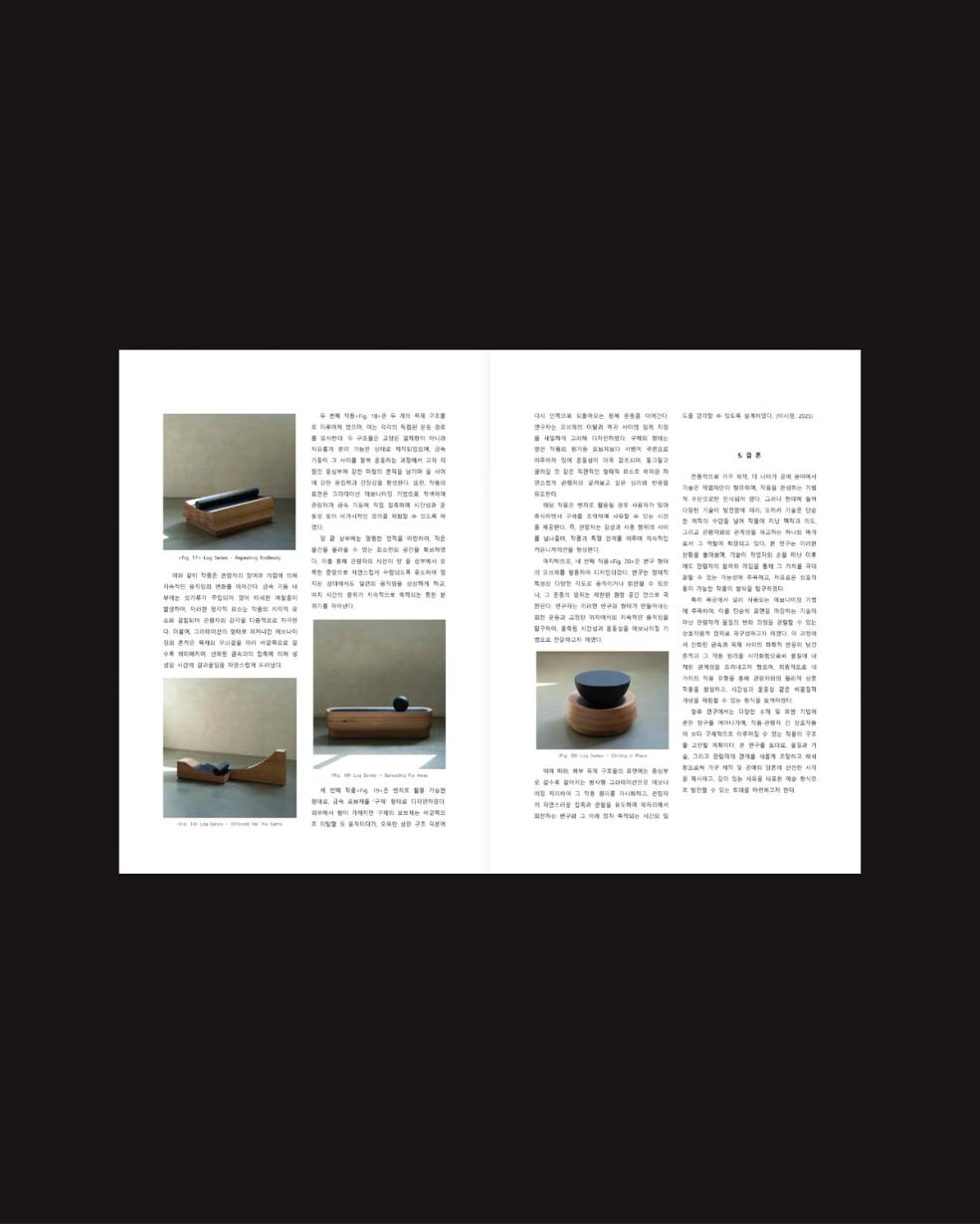
관람자와의 상호작용을 통해 에보나이징 기법의 작용 원리를 시각화한 가구조형 연구
A Study on Furniture Design Visualizing the Ebonizing Process through Interaction with Viewers
한국가구학회 2025 추계국제학술대회
Korea Furniture Society 2025 Fall International Conference
본 연구는 시대의 변화 속에서 공예 기법을 단순한 기술적 절차가 아닌 조형적 해석의 대상으로 바라보고, 관람자가 작품과 능동적으로 상호작용할 수 있는 지점을 마련하고자 한다. 이를 위해 목공예에서 널리 활용되는 마감 기법 중 하나인 ‘에보나이징(ebonizing)’을 주요 연구 대상으로 선정하여 그 작용 원리와 시각적 효과를 분석하였다. 에보나이징 기법은 소재 고유의 화학적 반응을 활용해 착색하는 방식으로, 단순히 목재 표면을 코팅하는 것이 아니라 재질 내부에서 흑색을 형성한다는 점에서 먹, 안료(pigment), 염료(dye) 등 기존의 착색 방식과 차별성을 지닌다. 그러나 그 작용 원리는 육안으로 쉽게 인지되지 않기 때문에, 목공예에 대한 전문 지식이 없는 관람자는 이를 작업자의 기술적 과정으로 인식하기 쉽다.
이에 본 연구는 에보나이징 기법이 발현되는 과정을 시각화하고, 관람자가 직접 개입할 수 있는 장치를 마련함으로써 작품과 관람자 사이에 새로운 소통의 장을 열고자 한다. 이는 표층적 현상 너머에 내재된 관념을 사유하고, 동시대 기술이 조형 작품에 부여하는 의미를 성찰할 수 있는 계기를 마련하는 데 의의가 있다. 궁극적으로 가구 제작을 비롯한 공예 전반에 적용 가능한 상호작용적 구조와 새로운 조형 언어를 제시함으로써 공예 담론의 확장에 기여하는 것을 목적으로 한다.
This study approaches craft techniques not merely as technical procedures but as subjects of formal interpretation, seeking to create opportunities for viewers to engage actively with artworks. To this end, it selects ebonizing, a finishing technique widely used in woodworking, as its primary research subject and examines its underlying mechanism and visual effects. Unlike conventional coloring methods such as ink, pigment, and dye, ebonizing utilizes the natural chemical properties of wood to produce a black tone from within the material rather than by coating its surface. However, because this process is not readily perceptible, viewers without specialized knowledge of woodworking tend to perceive it simply as a technical procedure performed by the maker.
Accordingly, this study visualizes the process of ebonizing and introduces an interactive system that enables viewers to engage directly with the work, thereby opening a new space for communication between the artwork and its audience. This approach encourages reflection on the ideas embedded beneath visible phenomena and on the meanings that contemporary techniques can bring to three-dimensional works. Ultimately, this study aims to contribute to the expansion of contemporary craft discourse by proposing an interactive framework and a new formal language applicable to furniture making and the broader field of craft.
관람자와의 상호작용을 통해 에보나이징 기법의 작용 원리를 시각화한 가구조형 연구
한국가구학회 2025 추계국제학술대회
본 연구는 시대의 변화 속에서 공예 기법을 단순한 기술적 절차가 아닌 조형적 해석의 대상으로 바라보고, 관람자가 작품과 능동적으로 상호작용할 수 있는 지점을 마련하고자 한다. 이를 위해 목공예에서 널리 활용되는 마감 기법 중 하나인 ‘에보나이징(ebonizing)’을 주요 연구 대상으로 선정하여 그 작용 원리와 시각적 효과를 분석하였다. 에보나이징 기법은 소재 고유의 화학적 반응을 활용해 착색하는 방식으로, 단순히 목재 표면을 코팅하는 것이 아니라 재질 내부에서 흑색을 형성한다는 점에서 먹, 안료(pigment), 염료(dye) 등 기존의 착색 방식과 차별성을 지닌다. 그러나 그 작용 원리는 육안으로 쉽게 인지되지 않기 때문에, 목공예에 대한 전문 지식이 없는 관람자는 이를 작업자의 기술적 과정으로 인식하기 쉽다.
이에 본 연구는 에보나이징 기법이 발현되는 과정을 시각화하고, 관람자가 직접 개입할 수 있는 장치를 마련함으로써 작품과 관람자 사이에 새로운 소통의 장을 열고자 한다. 이는 표층적 현상 너머에 내재된 관념을 사유하고, 동시대 기술이 조형 작품에 부여하는 의미를 성찰할 수 있는 계기를 마련하는 데 의의가 있다. 궁극적으로 가구 제작을 비롯한 공예 전반에 적용 가능한 상호작용적 구조와 새로운 조형 언어를 제시함으로써 공예 담론의 확장에 기여하는 것을 목적으로 한다.
A Study on Furniture Design Visualizing the Ebonizing Process through Interaction with Viewers
Korea Furniture Society 2025 Fall International Conference
This study approaches craft techniques not merely as technical procedures but as subjects of formal interpretation, seeking to create opportunities for viewers to engage actively with artworks. To this end, it selects ebonizing, a finishing technique widely used in woodworking, as its primary research subject and examines its underlying mechanism and visual effects. Unlike conventional coloring methods such as ink, pigment, and dye, ebonizing utilizes the natural chemical properties of wood to produce a black tone from within the material rather than by coating its surface. However, because this process is not readily perceptible, viewers without specialized knowledge of woodworking tend to perceive it simply as a technical procedure performed by the maker.
Accordingly, this study visualizes the process of ebonizing and introduces an interactive system that enables viewers to engage directly with the work, thereby opening a new space for communication between the artwork and its audience. This approach encourages reflection on the ideas embedded beneath visible phenomena and on the meanings that contemporary techniques can bring to three-dimensional works. Ultimately, this study aims to contribute to the expansion of contemporary craft discourse by proposing an interactive framework and a new formal language applicable to furniture making and the broader field of craft.