
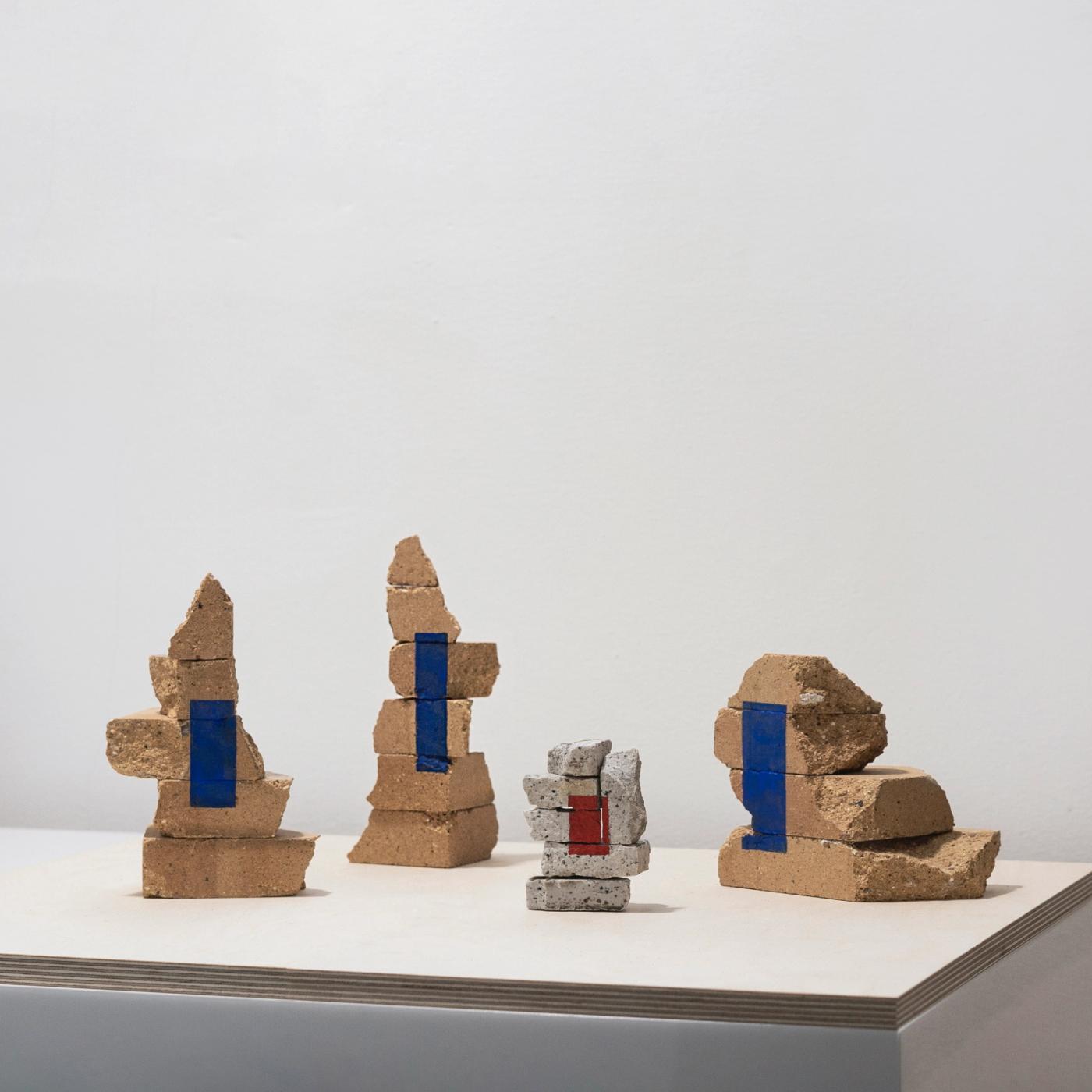

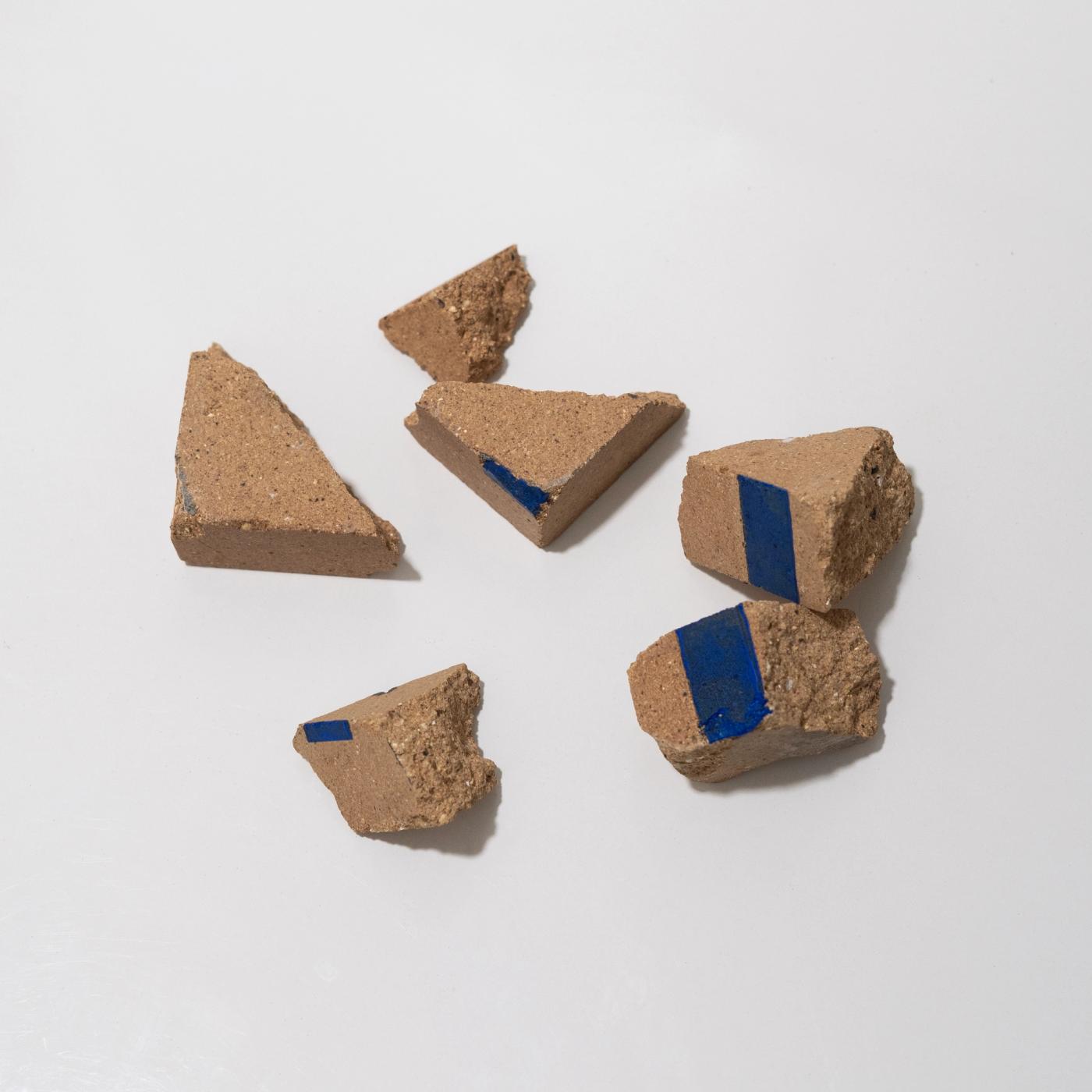

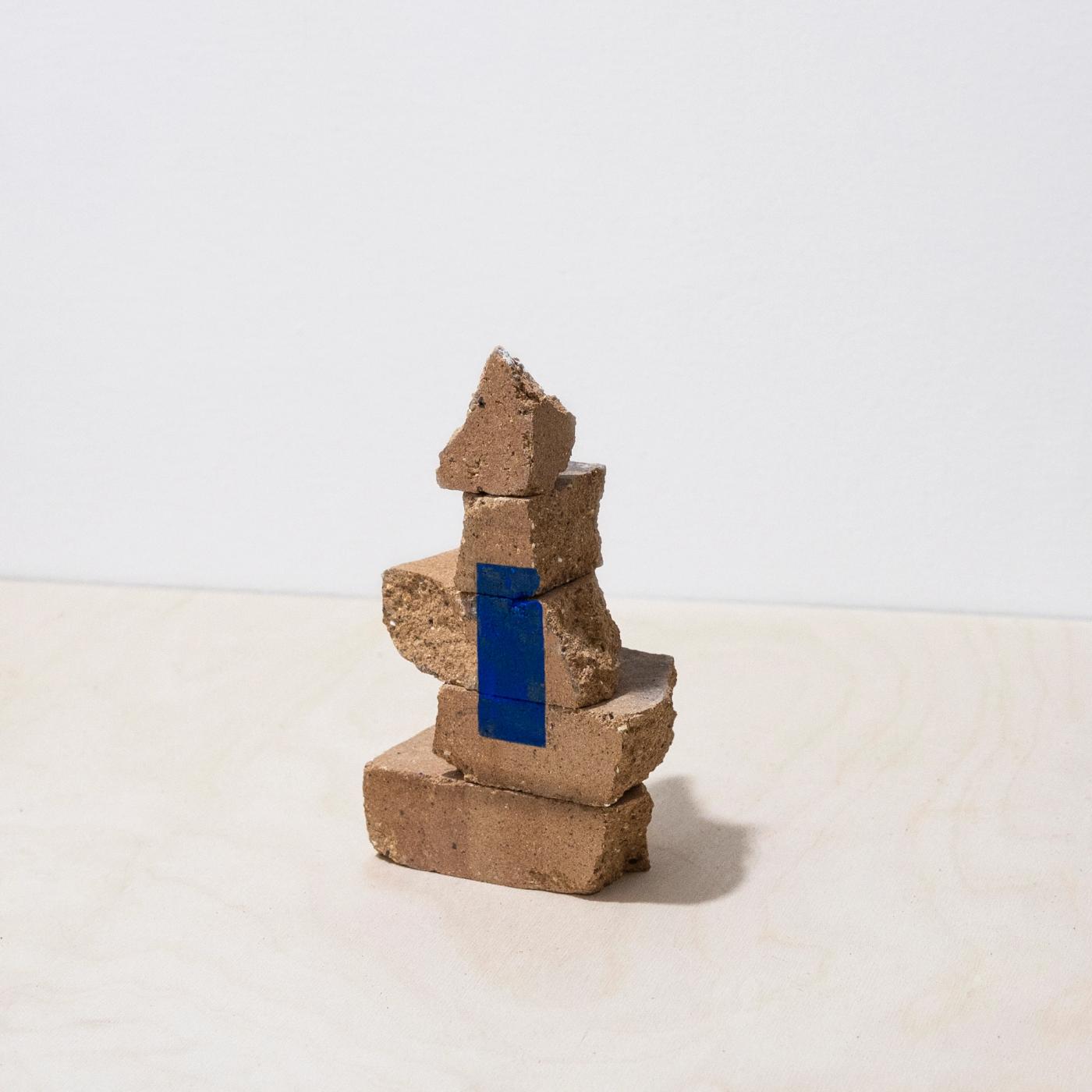
임의적인 형태로 부서진 벽돌 조각들을 하나의 구조체로 쌓아 올리고, 그 표면에 하나의 표식을 새긴다. 표식은 별도의 접착제 없이도 시각적으로 응집력을 형성하며, 파편이 흩어진 상태에서도 언제든 다시 조합될 수 있는 구조적 기준으로 작용한다. 본 작업은 표식이 지닌 시지각적 특성을 활용하여 서로 다른 대상들의 개별성을 유지하면서도 하나의 구조로 결합할 수 있는 가능성을 제시한다.
Irregularly fragmented brick pieces are assembled into a single structure, upon which a mark is inscribed. Without the use of adhesives, the mark creates visual cohesion and serves as a structural reference, allowing the fragments to be reassembled even after they have been scattered. By drawing on the visual and perceptual qualities of the mark, the work suggests the possibility that distinct entities can maintain their individuality while forming a unified structure.
Debris Union
임의적인 형태로 부서진 벽돌 조각들을 하나의 구조체로 쌓아 올리고, 그 표면에 하나의 표식을 새긴다. 표식은 별도의 접착제 없이도 시각적으로 응집력을 형성하며, 파편이 흩어진 상태에서도 언제든 다시 조합될 수 있는 구조적 기준으로 작용한다. 본 작업은 표식이 지닌 시지각적 특성을 활용하여 서로 다른 대상들의 개별성을 유지하면서도 하나의 구조로 결합할 수 있는 가능성을 제시한다.
Irregularly fragmented brick pieces are assembled into a single structure, upon which a mark is inscribed. Without the use of adhesives, the mark creates visual cohesion and serves as a structural reference, allowing the fragments to be reassembled even after they have been scattered. By drawing on the visual and perceptual qualities of the mark, the work suggests the possibility that distinct entities can maintain their individuality while forming a unified structure.