
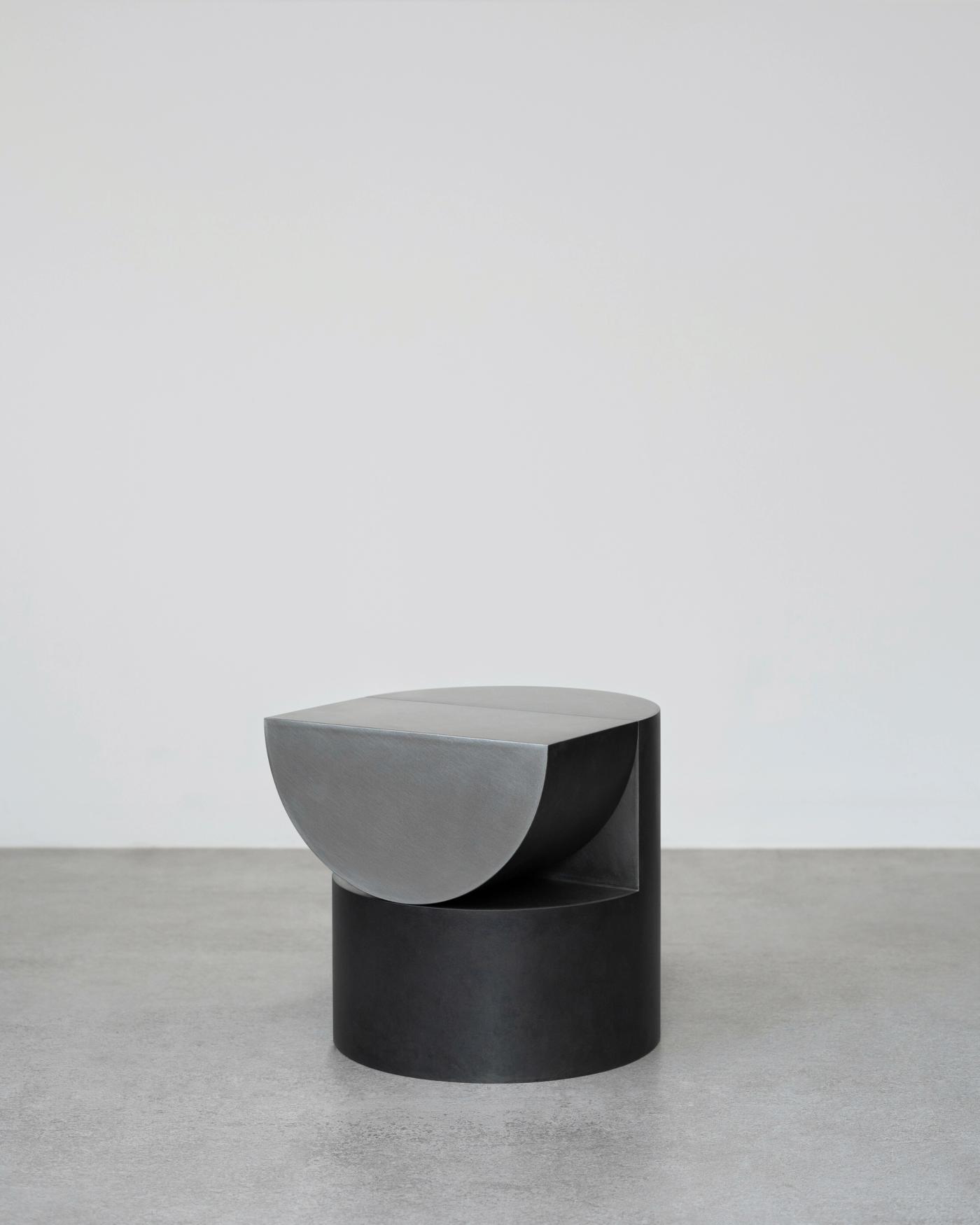


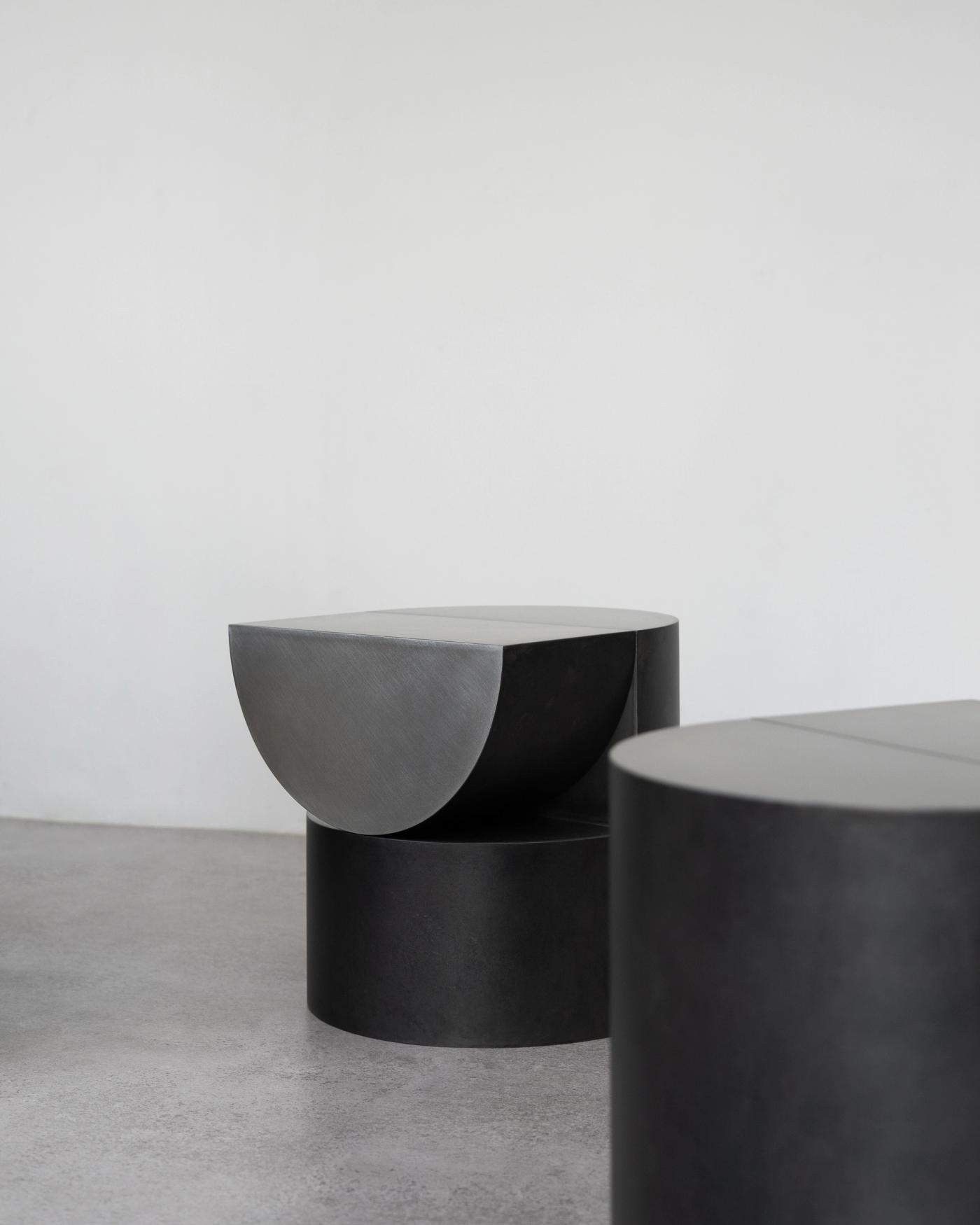
〈Split Log〉는 하나의 원기둥 구조를 절단, 해체, 재구성함으로써 숨겨진 측면을 드러내고 새로운 형태와 용도를 제안한다.
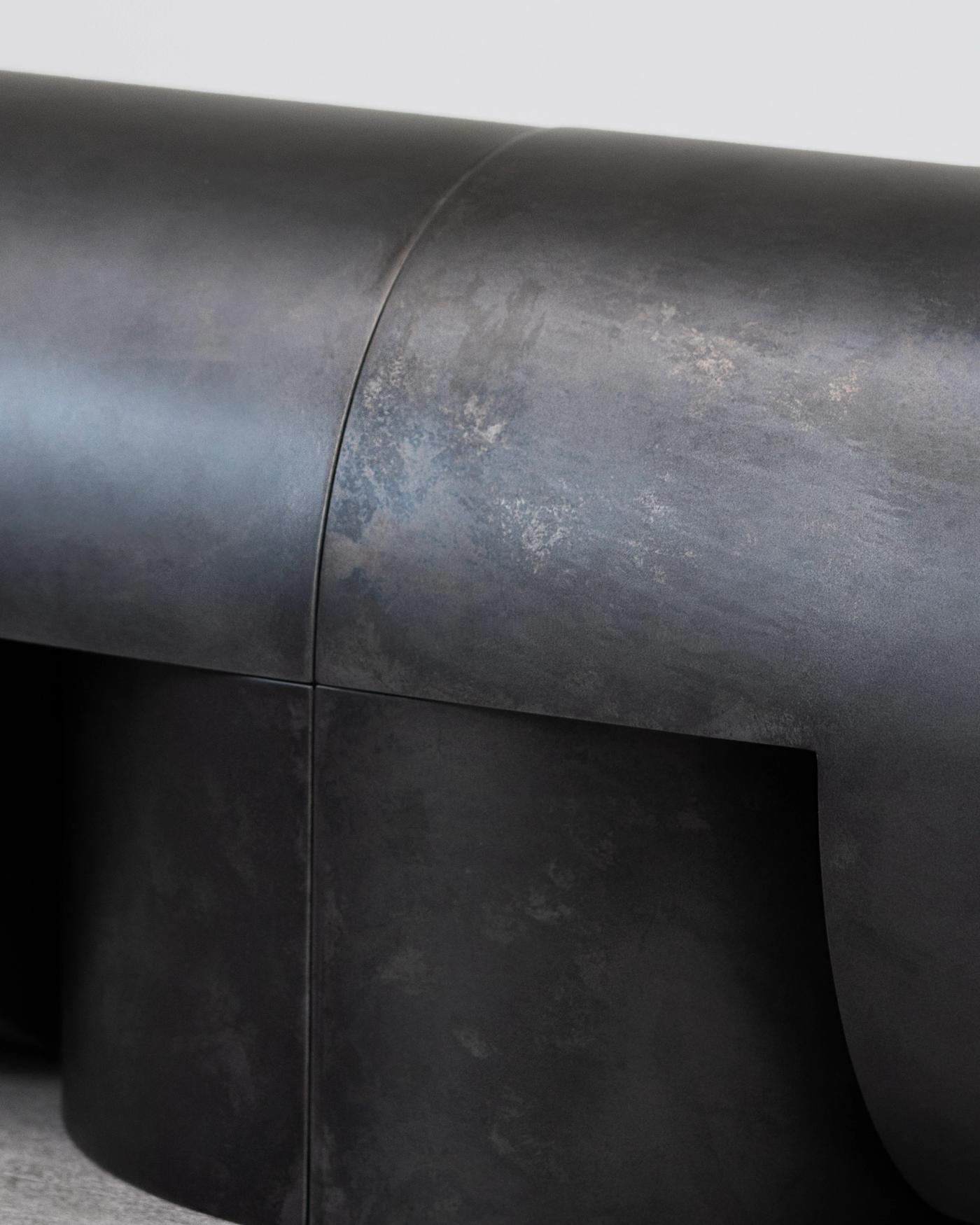
작품에 사용된 스테인리스 스틸은 일반적으로 부식에 강한 재료로 알려져 있지만, 특정 조건에서는 산화되어 변색되기도 한다. 작품의 외부는 산화 처리를 통해 재료의 숨겨진 성질을 드러내고, 절단된 단면은 본래의 금속성을 유지하여 겉과 속이 대비되는 구조를 형성한다. 이러한 이중 구조는 사물에 대한 고정된 인식에서 벗어나 재료가 지닌 잠재적 변형 가능성을 보여주며, 새로운 구조로의 전환을 암시한다.
Split Log reconfigures a cylindrical structure through cutting, disassembly, and reassembly, revealing hidden aspects of the form while proposing new forms and functions.
Although stainless steel is generally known for its resistance to corrosion, it can become discolored through oxidation under certain conditions. The oxidized exterior reveals the material’s latent properties, while the cut surface retains its original metallic character, creating a contrast between the exterior and the cut surface. This dual structure challenges fixed perceptions of objects, revealing the material’s latent potential for transformation and hinting at new structural configurations.
Split Log 01
〈Split Log〉는 하나의 원기둥 구조를 절단, 해체, 재구성함으로써 숨겨진 측면을 드러내고 새로운 형태와 용도를 제안한다.
작품에 사용된 스테인리스 스틸은 일반적으로 부식에 강한 재료로 알려져 있지만, 특정 조건에서는 산화되어 변색되기도 한다. 작품의 외부는 산화 처리를 통해 재료의 숨겨진 성질을 드러내고, 절단된 단면은 본래의 금속성을 유지하여 겉과 속이 대비되는 구조를 형성한다. 이러한 이중 구조는 사물에 대한 고정된 인식에서 벗어나 재료가 지닌 잠재적 변형 가능성을 보여주며, 새로운 구조로의 전환을 암시한다.
Split Log reconfigures a cylindrical structure through cutting, disassembly, and reassembly, revealing hidden aspects of the form while proposing new forms and functions.
Although stainless steel is generally known for its resistance to corrosion, it can become discolored through oxidation under certain conditions. The oxidized exterior reveals the material’s latent properties, while the cut surface retains its original metallic character, creating a contrast between the exterior and the cut surface. This dual structure challenges fixed perceptions of objects, revealing the material’s latent potential for transformation and hinting at new structural configurations.